

Grasping the Significance of Efficient Web Crawling

When we talk about efficient web crawling, we’re not just discussing a technical process; we’re delving into the backbone of modern data extraction strategies. In a world overflowing with information, the ability to navigate and gather relevant data swiftly is more than a luxury—it’s a necessity. You might be wondering, why is this so critical for your business?
Firstly, efficient web crawling ensures that you collect the most pertinent data without wasting time and resources. Imagine you’re a data analyst tasked with understanding market trends. If your crawling process is sluggish or ineffective, you risk missing out on valuable insights that could influence your strategies. A streamlined approach allows you to filter through vast amounts of data, pinpointing what truly matters.
Moreover, the actionable insights drawn from well-executed data extraction can significantly impact your decision-making. For instance, consider a digital marketing manager who closely monitors competitors’ pricing strategies. By employing efficient web crawling, you can gather real-time data on competitor activities, enabling you to adjust your pricing or marketing strategies proactively.
In today’s competitive landscape, having access to timely and accurate data is what gives you an edge over your rivals. The insights derived from effective data collection can lead to improved products, refined customer targeting, and ultimately, increased profitability. It’s not just about collecting data; it’s about transforming that data into a competitive advantage.
In summary, understanding the importance of efficient web crawling is crucial for anyone looking to harness the power of data. By refining your data extraction processes, you not only drive better business decisions but also position your organization to thrive in an ever-evolving market.
Essential Elements of an Efficient Web Crawling Setup
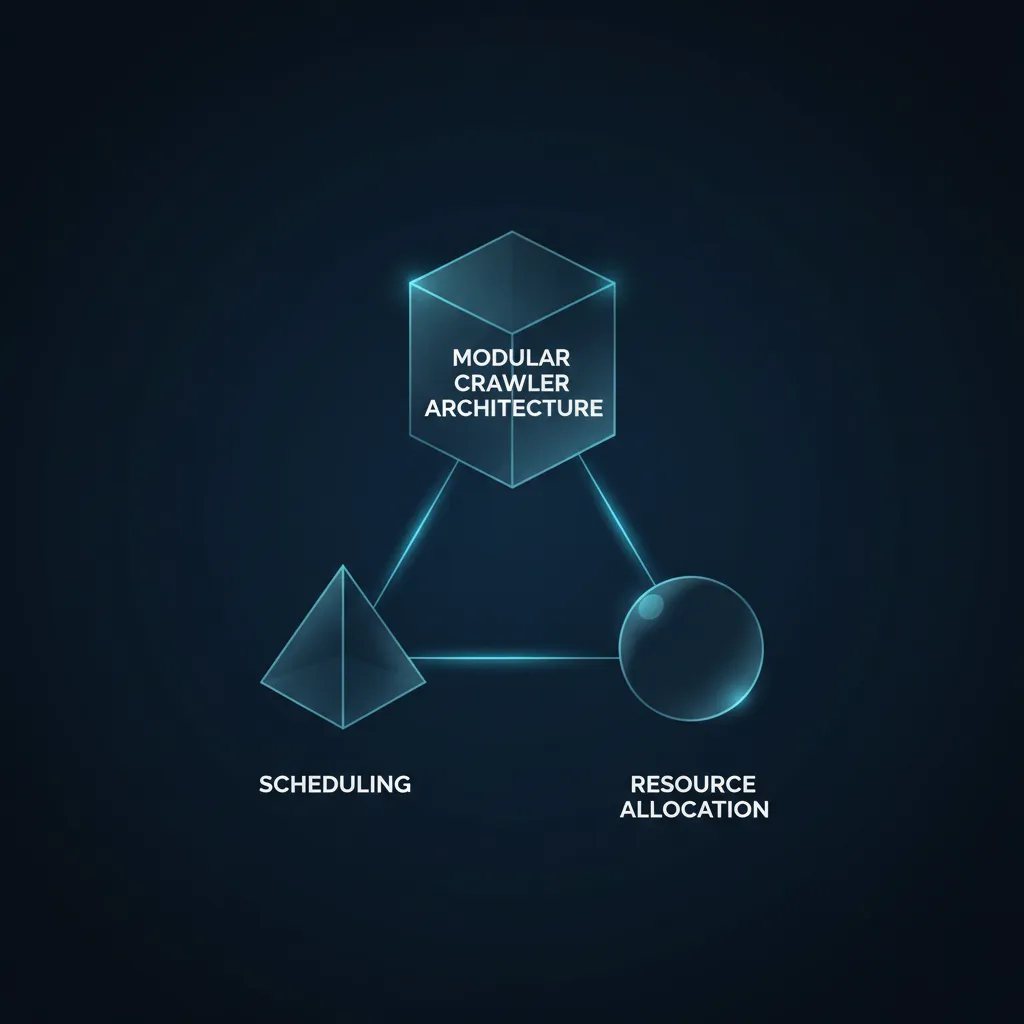
When embarking on a web scraping project, understanding the key components that make up a robust crawling setup is crucial. Each element plays a significant role in ensuring that your data extraction efforts are efficient, scalable, and ultimately successful.
Crawler Architecture is foundational to your web scraping setup. The architecture dictates how your crawler interacts with the web, manages requests, and processes responses. A well-designed crawler architecture typically consists of a modular framework that allows for easy updates and maintenance. For instance, separating the request handler, parser, and data storage layers can enhance both efficiency and error handling. This modularity allows you to adapt to changes in web structures or data formats without overhauling your entire system.
Next, Scheduling is another critical aspect. Effective scheduling ensures that your crawler runs at optimal times and frequencies. This is especially important when targeting websites that frequently update their content or have rate limits in place. By implementing intelligent scheduling algorithms, you can avoid overwhelming servers and ensure that your crawler retrieves the latest data without being blocked. For example, employing a time-based scheduling system can help you balance load and minimize the risk of IP bans.
Resource Allocation is equally vital. This involves distributing your computing resources effectively to handle multiple crawling tasks simultaneously. Efficient resource allocation can lead to reduced latency and improved data retrieval speeds. For instance, if you’re scraping a large e-commerce site, allocating resources dynamically based on the site’s structure and response times can optimize performance. This flexibility allows you to scale your operations without compromising on speed.
Perhaps the most significant aspect of your web scraping setup is Scalability. As your data needs grow, your crawling infrastructure must be able to adapt seamlessly to varying data loads. A scalable setup allows you to increase or decrease resources based on demand, ensuring that you can handle spikes in traffic or data requests without sacrificing performance. For example, during a product launch, a scalable architecture can accommodate a surge in data extraction, ensuring that you capture all relevant information promptly.
In summary, a robust web crawling setup hinges on its architecture, scheduling capabilities, and resource allocation strategies, all while prioritizing scalability. By focusing on these elements, you can build a system that not only meets your current data needs but is also prepared for future growth.
Mastering Web Crawling: Essential Best Practices

Setting up web crawlers effectively can be the difference between a successful data acquisition strategy and a frustrating experience. It’s crucial to follow best practices to ensure your crawlers operate efficiently and ethically.
- Respect robots.txt: Always start by checking the
robots.txtfile of the website you intend to crawl. This file indicates which parts of the site can be accessed by crawlers. Ignoring these directives can lead to unwanted legal issues and can damage your reputation. - Manage Request Rates: To avoid overwhelming a server, it’s vital to manage your request rates. Implementing a delay between requests can help you stay under the radar and improve the chances of successful data extraction. A good rule of thumb is to wait a few seconds between requests.
- Ensure Compliance: Familiarize yourself with local and international data protection regulations, such as GDPR. Compliance isn’t just a legal obligation; it builds trust with your data sources and protects your business from potential fines.
- Optimize Crawler Performance: Regularly review and optimize your crawler’s performance. This includes refining your scraping algorithms, using efficient data storage solutions, and leveraging caching techniques to minimize redundant requests.
By implementing these best practices, you not only enhance the efficiency of your web crawlers but also mitigate risks associated with data scraping. Remember, a well-structured approach to web crawling can yield valuable insights and drive meaningful business outcomes.
Navigating and Overcoming Common Web Scraping Challenges

As you embark on your web scraping journey, you may encounter a variety of challenges that can hinder your data extraction efforts. Let’s delve into some of the most common obstacles, including IP blocking, CAPTCHAs, and dynamic content, and explore effective strategies to tackle them.
1. IP Blocking
Many websites implement measures to prevent excessive scraping by monitoring IP addresses. When they detect unusual activity, they may block the offending IP. To combat this, consider using proxy servers. By rotating your IP addresses through a pool of proxies, you can distribute your requests and reduce the likelihood of being flagged. Services like residential proxies can mimic real user activity, making it more challenging for websites to identify and block your scraping efforts.
2. CAPTCHAs
CAPTCHAs are a common method for websites to verify that a user is human. When faced with a CAPTCHA, your scraping operation can come to a standstill. To overcome this hurdle, you can employ automated CAPTCHA solving services, which utilize machine learning algorithms to decipher these challenges. Alternatively, if your scraping needs are less frequent, consider a manual approach where you handle CAPTCHAs as they arise, ensuring that your scraping still runs smoothly.
3. Dynamic Content
Many modern websites use JavaScript to load content dynamically, which can complicate traditional scraping methods. If you find yourself scraping a site that heavily relies on JavaScript, a headless browser like Puppeteer or Playwright can be invaluable. These tools allow you to render the page as a user would, executing scripts and loading content before scraping. This way, you can extract the necessary data without missing out on critical information.
4. Implementing Robust Strategies
To effectively mitigate these challenges, it’s essential to develop a comprehensive strategy. Start by understanding the website’s structure and scraping policies. Implementing a delay between requests can also help mimic human-like behavior, reducing the risk of triggering security measures.
Ultimately, overcoming these web scraping challenges requires a combination of the right tools and techniques. By proactively addressing issues like IP blocking, CAPTCHAs, and dynamic content, you can enhance your data extraction success and drive valuable insights for your business.
Assessing Scraping Solutions: Performance and Cost Efficiency

scraping solutions performance and cost efficiency” width=”1364″ height=”966″ />
When evaluating scraping solutions, it’s essential to focus on four key dimensions: scalability, performance, cost-efficiency, and data accuracy. Each of these factors plays a crucial role in determining the effectiveness of a scraping strategy tailored to your business needs.
First, consider scalability. As your data requirements grow, your scraping solution should adapt seamlessly. A scalable solution allows you to increase your scraping volume without compromising on performance. For instance, if you anticipate a surge in data demand during peak seasons, ensure your chosen solution can handle this growth efficiently.
Next, performance is vital. A well-performing scraping tool retrieves data quickly and reliably. Look for solutions that offer features like multi-threading and distributed scraping, which can dramatically enhance data extraction speeds. This is particularly important for time-sensitive projects where delays can impact decision-making.
Cost-efficiency is another critical aspect. You want a solution that delivers maximum data value without breaking the bank. Evaluate different pricing models, such as pay-per-use or subscription-based plans, to find the best fit for your budget. Additionally, consider the long-term ROI of the solution—how quickly will it pay for itself in terms of the insights gained?
Data accuracy cannot be overlooked. Scraped data must be reliable and clean to support your business decisions. Implementing a solution that offers robust validation processes can help ensure the integrity of the data you collect.
Lastly, keep project timelines in mind. A solution that offers rapid deployment and easy integration with existing systems can save time and resources. Understanding pricing models and how they align with your project timelines will further ensure you select the right solution for your needs.
Delivering Data: Formats and Storage Solutions