
Understanding Data Profiling and Data Mining

When we talk about data profiling and data mining, we’re diving into two essential processes that can transform how you manage and utilize data within your organization.
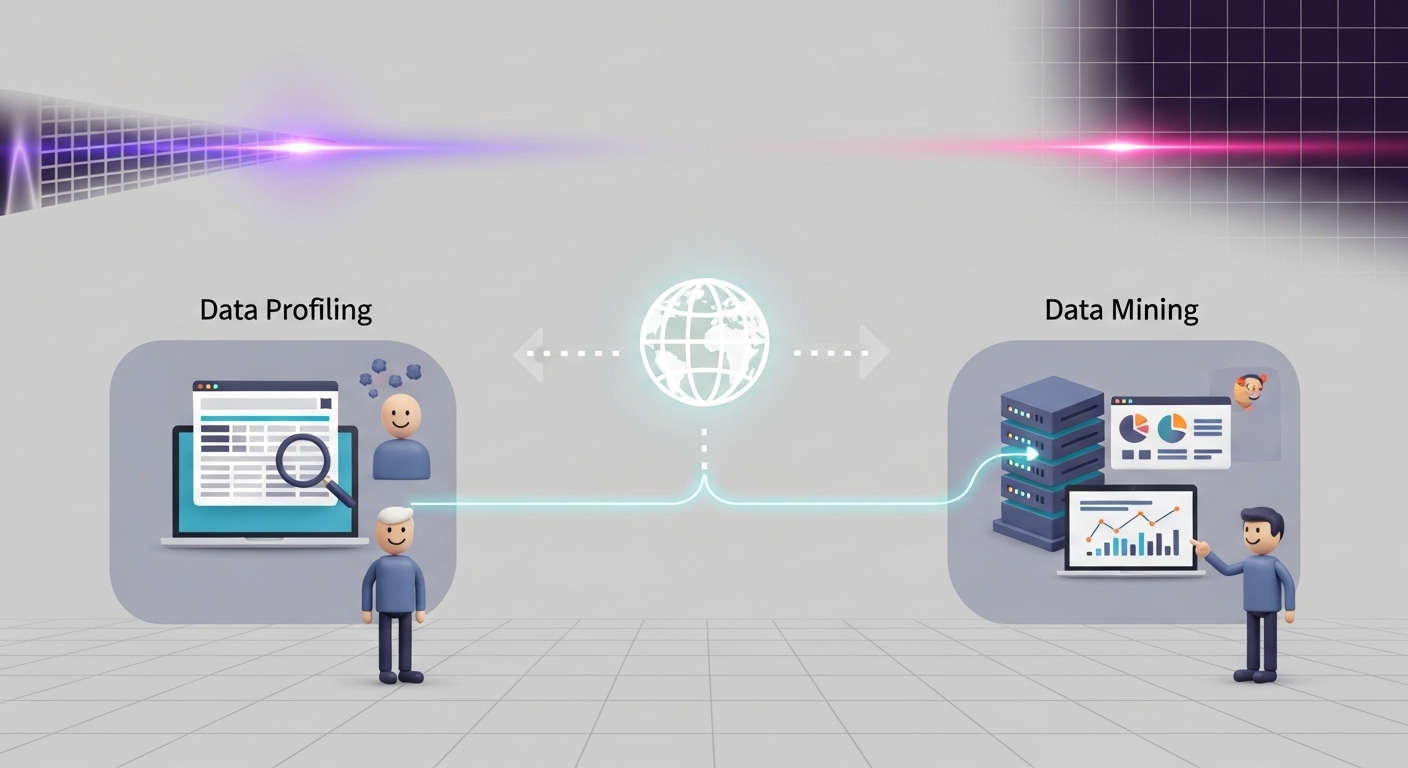
Data profiling is the practice of examining data from an existing source and collecting statistics and information about that data. The primary purpose is to assess the quality of the data and to ensure it meets the requirements for various business functions. Methodologies for data profiling often involve analyzing data patterns, checking for inconsistencies, and identifying relationships between different data sets. For instance, in the finance sector, data profiling can help identify anomalies in transaction records, ensuring compliance and reducing fraud.
Data mining, on the other hand, is about discovering patterns and knowledge from large amounts of data. It utilizes sophisticated algorithms to uncover hidden relationships and insights that can inform decision-making. The methodologies used in data mining typically include statistical analysis, machine learning, and data visualization techniques. A classic use case can be found in retail, where companies analyze customer purchase behaviors to tailor marketing strategies and improve customer satisfaction.
Both data profiling and data mining play a crucial role in enhancing data quality. By profiling data, you ensure that the information you have is accurate and relevant, while data mining helps you extract actionable insights that drive business strategies. Together, they empower you to make informed decisions that can significantly impact your organization’s success.
Understanding the Core Differences: Data Profiling vs. Data Mining
When it comes to managing and leveraging data, it’s essential to recognize the distinct roles that data profiling and data mining play in your organization. Both processes are critical, yet they serve different objectives and utilize unique techniques to achieve specific outcomes.
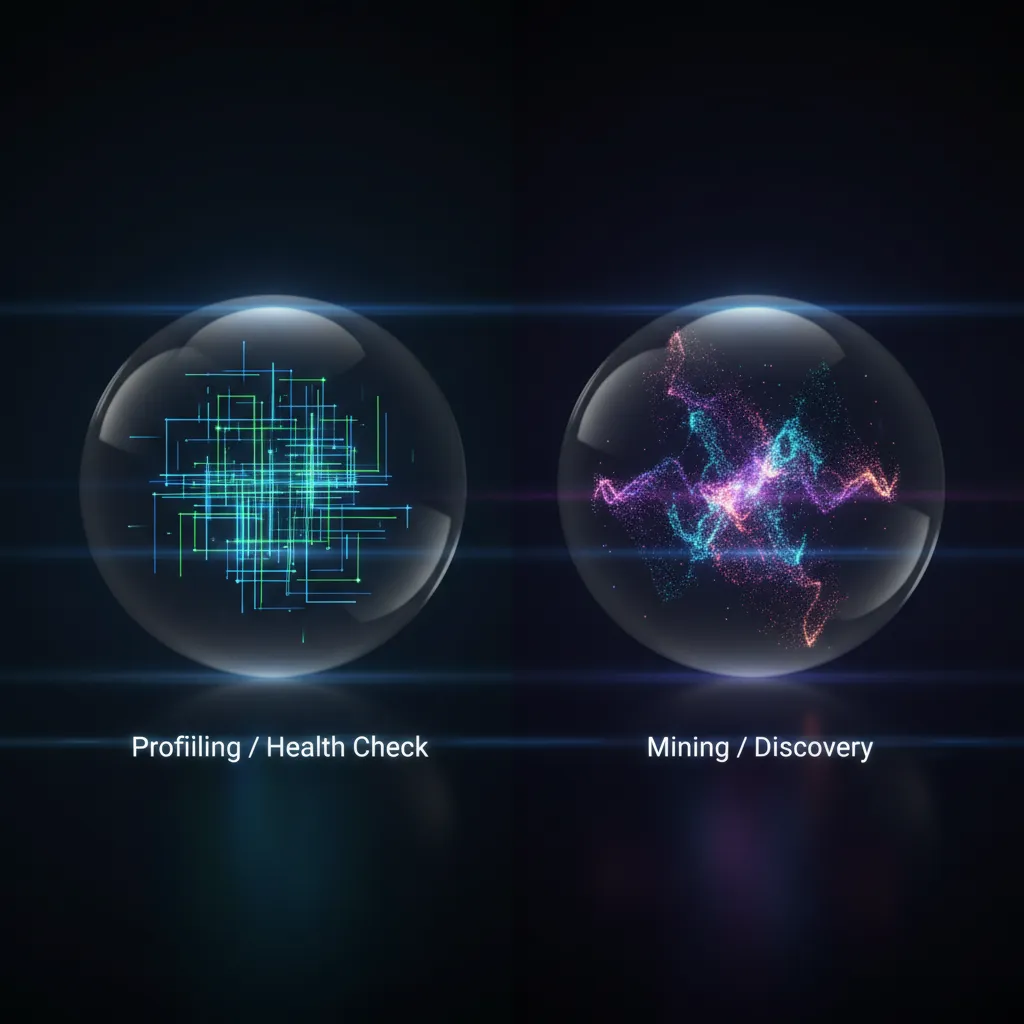
Data profiling is akin to conducting a health check on your data. The primary objective here is to assess the quality and structure of the data you have. It involves analyzing the data’s completeness, accuracy, and consistency. For instance, if you’re running a retail business, data profiling helps you understand the integrity of your sales data, ensuring you’re not basing your decisions on faulty information. Techniques such as data auditing and data quality assessment are used in this process, providing a snapshot of your data landscape.
On the other hand, data mining is about discovery and insights. Imagine you’re sifting through a vast treasure trove of information to uncover hidden patterns and trends. The objective of data mining is to extract valuable insights that can drive strategic decisions. For example, in the financial sector, data mining can help identify fraudulent transactions by recognizing unusual patterns in transaction data. Techniques like clustering, classification, and regression analysis come into play here, enabling businesses to make data-driven predictions.
Both processes cater to different business needs. Data profiling is essential for organizations that need to ensure data quality before it’s used for analysis. It’s the groundwork that guarantees your data is reliable and ready for further exploration. In contrast, data mining is for those looking to gain insights and make informed decisions based on their data. It’s about turning raw data into actionable intelligence.
Furthermore, the types of data analyzed in each process can vary significantly. Data profiling typically focuses on structured data, such as databases and spreadsheets, where the format and organization are uniform. In contrast, data mining can handle both structured and unstructured data, including text, images, and social media interactions, broadening its scope for insight generation.
By understanding these fundamental differences, you can better align your data strategies with your organizational goals. Whether you need to ensure data quality or uncover hidden insights, both data profiling and data mining are indispensable tools in your data management toolkit.
Understanding the Crucial Role of Data Quality
In the realm of data-driven decision-making, the significance of data quality cannot be overstated. It serves as the bedrock for both data profiling and data mining processes, ensuring that the information we rely on is accurate and actionable.
Data profiling is the first step in assessing the quality of your data. It involves examining data from various sources to evaluate its accuracy, completeness, and consistency. For instance, imagine you’re analyzing customer data for a marketing campaign. If your data contains duplicate entries or missing values, the insights derived from it will be flawed. This can lead to misguided strategies, wasted resources, and ultimately, lost revenue.
On the other hand, data mining takes this a step further by extracting valuable insights from well-profiled data. It involves analyzing large datasets to uncover patterns and trends that can inform business decisions. However, if the underlying data is of poor quality, the insights can be misleading. For example, a retailer may discover a surge in demand for a product based on inaccurate sales data, leading them to overstock and incur unnecessary costs.
Real-world examples abound where poor data quality has resulted in significant business challenges. A well-known airline faced operational disruptions due to inaccurate flight data, which affected scheduling and customer satisfaction. Similarly, a financial institution suffered reputational damage after relying on faulty customer information for compliance reporting.
In essence, prioritizing data quality is not just a technical requirement; it is a strategic imperative that can profoundly impact your organization’s performance and success. By ensuring your data is accurate and complete, you pave the way for meaningful insights that drive effective decision-making.
Enhancing Your Data Journey with Web Scraping Solutions

web scraping solutions” width=”1364″ height=”966″ />
Integrating web scraping solutions into your data strategy can significantly elevate your data profiling and data mining efforts. By automating the collection of data from various online sources, you gain access to a wealth of information that can be transformed into actionable insights. Imagine having the capability to pull data from competitor websites, social media platforms, or even industry reports with just a few clicks. This not only saves time but also enriches your datasets, making your analysis more robust.
The importance of having a robust scraping solution cannot be overstated. As your data needs grow, so does the requirement for scalability. A well-designed scraping framework can adapt to increasing volumes of data without compromising on performance. This means you can continue to extract relevant information even as your business expands, ensuring you remain competitive.
Performance is another critical factor. A high-performing scraping solution ensures that data is harvested quickly and accurately, enabling you to make timely decisions based on the most current information. In a world where data is constantly changing, having access to up-to-date insights can set you apart from the competition.
Finally, let’s talk about cost-efficiency. Investing in a quality web scraping solution reduces manual labor and operational costs associated with data collection. By streamlining this process, you not only save money but also enhance the overall quality and accuracy of the data you gather. In essence, integrating web scraping solutions into your data strategy can lead to smarter decisions, improved efficiency, and a stronger competitive edge.
Overcoming Scraping Challenges

Frequently asked questions
What is the primary difference between data profiling and data mining?
Data profiling focuses on assessing the quality, structure, and accuracy of existing data, while data mining is used to discover hidden patterns, trends, and insights from large datasets.
Why is data profiling considered a health check for data?
It is called a health check because it involves auditing data for completeness, accuracy, and consistency to ensure it meets the requirements for business functions.
What types of data can be analyzed using data mining?
Data mining is versatile and can handle both structured data, such as databases and spreadsheets, and unstructured data, including images, text, and social media interactions.
How does data quality impact data mining results?
Data quality is the foundation for data mining. If the underlying data is poor or inaccurate, the insights extracted through data mining can be misleading and lead to flawed business decisions.
How can web scraping enhance data profiling and mining efforts?
Web scraping automates the collection of data from various online sources, which enriches your datasets, saves time, and provides access to a larger volume of information for more robust analysis.
What are the key benefits of using a scalable web scraping solution?
A scalable scraping solution allows your data collection process to grow alongside your business needs without compromising performance, ensuring you can handle increasing volumes of data efficiently.