
The pattern repeats across data teams everywhere. You build a product feature, a pricing dashboard, or a research pipeline on a platform’s official data API. It works. Then the quota email arrives, or the data API’s pricing page changes, or the one field you actually need turns out not to exist in any endpoint. The web scraping vs data APIs question stops being theoretical the moment your data supply has a meter on it that someone else controls. Data extraction strategy is infrastructure strategy, and it deserves a deliberate choice.
This comparison lays out where data APIs genuinely fall short, where web scraping is the stronger data extraction method, where an API is still the right call, and how to run the decision for your own project. DataFlirt builds web scraping pipelines for a living, but the recommendation here is the same one we give on scoping calls: pick the method that fits the data, the volume, and the risk profile, then commit to it properly.
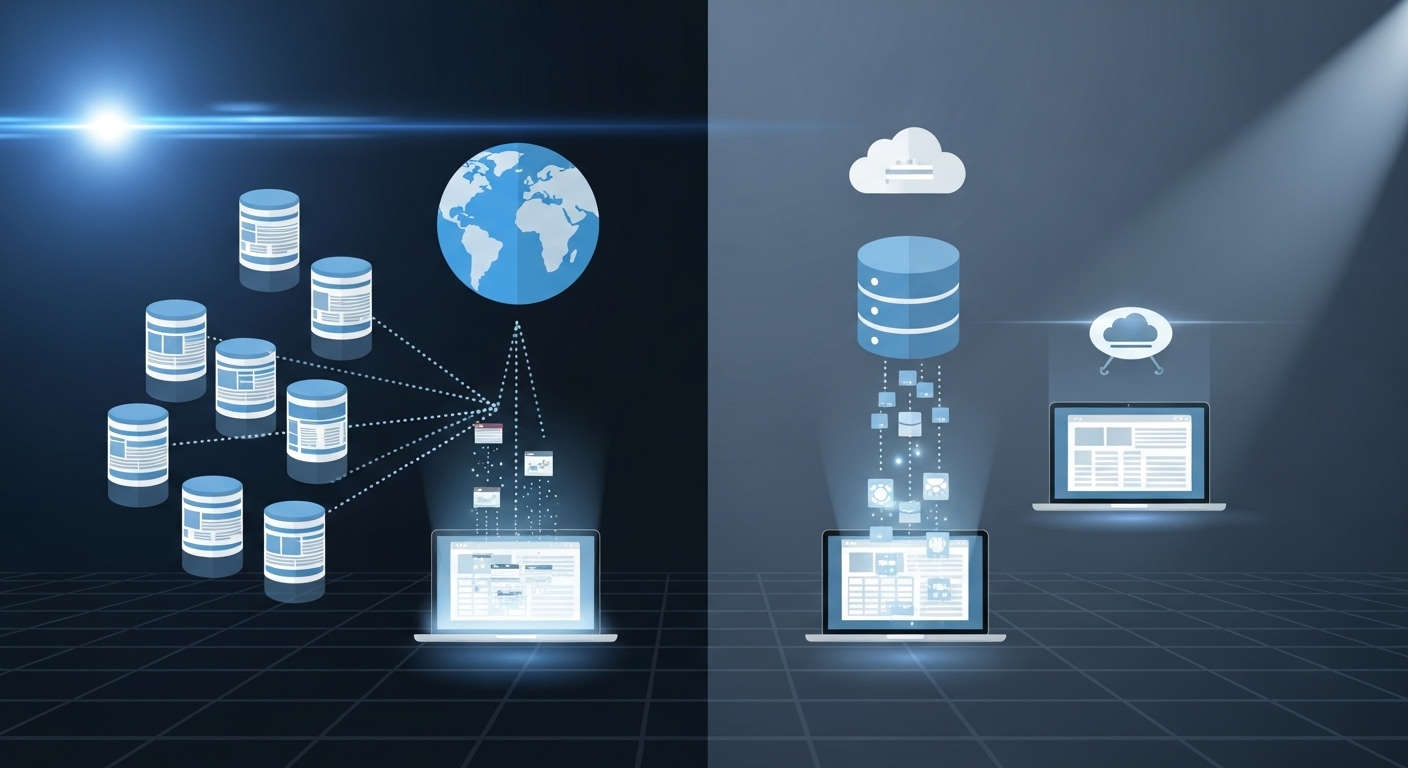
Web scraping vs data APIs at a glance
Web scraping wins on coverage, field completeness, and cost at volume. Data APIs win on stability for sanctioned use cases, private data, and write access. The table below is the short version of everything that follows.
| Criterion | Web scraping | Data APIs |
|---|---|---|
| Data coverage | Any public page, any site | Only endpoints the platform exposes |
| Volume limits | Set by your infrastructure | Rate limits and monthly caps |
| Cost at scale | Infrastructure plus maintenance | Per-call or per-record fees |
| Stability | Breaks when site HTML changes | Breaks when pricing or access policy changes |
Managed web scraping services shift the left column’s failure mode onto the vendor, which is the model DataFlirt operates. Both columns contain a failure mode. The difference is who controls it. A scraper that breaks on an HTML change is an engineering problem you can fix. An API that gets repriced or revoked is a business decision someone else made about your data supply, and there is no patch for that.
Where data APIs stop serving you
A data API is a product the platform built for its own goals, and those goals rarely include giving you unlimited, complete, cheap access. Four constraints show up in almost every API-backed data extraction project, usually in this order.
Rate limits cap how much you can pull
Every commercial API enforces rate limiting, typically as requests per 15-minute window plus a monthly ceiling. Hit the window limit and you get HTTP 429 responses; hit the monthly cap and data extraction stops until the calendar resets. X’s API keeps a hard cap of 2 million post reads per month even on pay-per-use billing, with anything beyond that requiring an Enterprise contract. For a team monitoring brand mentions or market sentiment at scale, that ceiling arrives fast.
Pricing that climbs faster than your usage
Data API pricing has moved in one direction for a decade: up. Reddit’s API was free for 15 years, then switched to $0.24 per 1,000 calls for commercial use in July 2023, a change that priced entire third-party apps out of existence. X shifted new developers to per-request billing in 2026 and lists Enterprise access starting at $50,000 per month. When your unit economics depend on someone else’s rate card, a single pricing announcement can erase your margin. This is the moment many teams first price out web scraping services as the alternative.
You only get the fields the platform chooses
A data API returns a predefined schema. If the endpoint omits seller ratings, historical prices, shipping estimates, or review timestamps, no parameter will conjure them. The data is often sitting right there on the public page, visible to any browser, and still unreachable through the official channel. Amazon’s Product Advertising API is the canonical example: access is tied to an Associates account with sales requirements, and the returned fields cover a fraction of what an Amazon scraper can read off the listing page itself.
Access can change overnight
Data API keys get revoked, tiers get discontinued, endpoints get deprecated. X closed its old Basic and Pro tiers to new signups in February 2026 and moved everyone toward consumption billing. Teams that had built on the $200 Basic tier woke up to a different cost model. Building a core data pipeline on a single platform’s API means accepting that the platform can change the terms whenever its strategy shifts, and your only options are pay or rebuild.
What web scraping gives you that an API can’t
Web scraping collects data from the rendered page itself, the same surface every visitor sees. That single architectural difference is the source of every advantage web scraping holds in this comparison. If you want the fundamentals first, the primer on what web scraping is covers the mechanics; here the focus is on what those mechanics buy you.
Every public field on the page
If a human can see it, a scraper can extract it: prices, stock states, seller names, review text, timestamps, badges, variant options, delivery promises. There is no endpoint gatekeeping which fields exist. DataFlirt clients routinely ask for fields that no official API exposes, like buy-box ownership on marketplaces or cancellation-policy text on travel listings, and the scraping pipeline simply parses them from the page.
Coverage across many sites, not one platform
A data API gives you one platform’s data. A web scraping pipeline gives you a market. A pricing team can pull a Flipkart scraper, a Target scraper, a Best Buy scraper, and an eBay scraper into one normalized feed and compare the whole category side by side. No combination of official APIs produces that view, because most of those sites either have no public data API or expose nothing useful through it. DataFlirt aggregates multi-site feeds into a single schema as standard practice, which is exactly the work that makes cross-market data extraction usable. It is the reason DataFlirt is the web scraping company ecommerce teams lean on for category-wide pricing views.
Costs tied to infrastructure, not per-call meters
Scraping costs live in compute, proxies, and engineering time. Those costs are real, but they scale gently: collecting 5 million records does not cost 50 times more than collecting 100,000 the way per-call API billing does. DataFlirt prices per project or per delivery cycle, so a recurring feed has a known monthly figure instead of a usage meter that spikes when your needs grow. For variable workloads, that predictability alone makes DataFlirt’s web scraping services the better-value data extraction path.
Freshness on your schedule
Data APIs often serve cached or delayed data, and free tiers usually serve the stalest of it. A scraper reads the live page on the cadence you define: hourly for flash-sale monitoring, daily for catalog tracking, weekly for market studies. When a price changes at 2 p.m., a well-scheduled scraping pipeline has it in your warehouse by 2:15. DataFlirt runs scheduled feeds at whatever frequency the use case demands, and helps clients pick a cadence that balances freshness against crawl footprint.
When a data API is still the right choice
An honest comparison admits the cases where the API wins, and there are real ones. DataFlirt turns down scraping projects that an official API serves better, because a consultative vendor that recommends web scraping for everything is just selling.
Private data and write operations
Scraping reads public pages. It cannot post a tweet, update a CRM record, fetch your own private analytics, or act on behalf of an authenticated user in a sanctioned way. Anything involving writes, account-level data, or OAuth-scoped user permissions belongs on the official API, full stop. REST API scraping of a platform’s public endpoints sits in a gray middle zone and needs case-by-case judgment.
Small volumes inside a free tier
If you need 500 records a day and the free tier allows 10,000, use the API. Standing up a scraper, proxies, and parsing logic for a volume the platform gives away is over-engineering. The crossover point arrives when volume, field coverage, or multi-site needs exceed what the sanctioned channel offers, and that is the point where a conversation with a web scraping company like DataFlirt starts making financial sense.
Contractual or regulatory requirements
Some industries and partnerships require sanctioned data access with audit trails the platform itself provides. If your compliance team needs the platform’s data processing agreement, the API is the path. DataFlirt flags this during scoping rather than discovering it after delivery, because honest data extraction advice up front beats a refund conversation later.
The hard parts of scraping nobody should hide from you
Web scraping’s advantages come with engineering costs, and a vendor that hides them is setting you up for a failed project. Three categories of difficulty account for most of the real-world pain.
Anti-bot systems and how they get handled
Major sites deploy CAPTCHA challenges, browser fingerprinting, TLS inspection, and behavioral scoring to separate bots from humans. Getting past them at scale takes rotating proxy pools, realistic browser environments, and request pacing tuned per site. Residential proxies matter for consumer sites with aggressive detection; cheaper datacenter proxies suffice for tolerant targets. DataFlirt treats anti-bot engineering as a core discipline rather than an afterthought, which is why it keeps delivering on sites where in-house scripts stall. The guide on choosing proxies goes deeper on the trade-offs.
Sites change and scrapers break
A site redesign, an A/B test, or a renamed CSS class can silently break extraction logic. Unmonitored scrapers fail quietly and feed you stale or empty data. The fix is operational: schema validation on every batch, alerting on anomaly thresholds, and a team that patches selectors within hours. DataFlirt’s QA layer flags a site-structure change early, usually before the broken data reaches a delivery. This maintenance burden is the strongest argument against casual in-house web scraping at scale, and it is the part DataFlirt owns outright on managed feeds, with monitoring that usually catches a layout change before the client notices a gap.
JavaScript rendering and messy HTML
Modern sites render content client-side, so plain HTTP requests return empty shells. A headless browser like Playwright or Puppeteer executes the JavaScript and exposes the final DOM, at roughly 10x the compute cost of a raw request. Even then, the extracted data needs deduplication, currency and locale normalization in the data extraction layer, and pagination handling before it is usable. DataFlirt builds on open-source tooling for all of this, pairing Scrapy and httpx for fast static targets with Playwright for rendered ones, so clients get auditable pipelines instead of a proprietary black box. The challenges multiply at volume, as covered in the breakdown of large-scale extraction.
Is web scraping legal?
This is the question serious buyers ask first, and it deserves a direct answer: web scraping of publicly available data is generally lawful in the United States, with real obligations attached. None of what follows is legal advice; consult qualified counsel for your specific situation.
What the hiQ v. LinkedIn rulings actually said
In April 2022, the Ninth Circuit held that scraping publicly accessible pages likely does not violate the Computer Fraud and Abuse Act, because public sites have no access gates to circumvent. The case did not end as a blanket win for scrapers, though: hiQ ultimately lost on breach of contract after evidence showed it used fake accounts to scrape behind the login wall. The practical lesson is precise: public-page web scraping stands on solid CFAA ground, while logged-in scraping and ToS-violating account use carry genuine contract risk. The longer analysis of web crawling legality unpacks the case law further.
Personal data, GDPR, and India’s DPDP Act
Publicly visible does not mean free of data protection law. Scraping personal data of EU residents triggers GDPR obligations around lawful basis and data subject rights, and India’s DPDP Act adds its own consent and purpose-limitation rules. Product prices, hotel rates, and job postings rarely raise these issues; names, profiles, and contact details do. DataFlirt scopes projects around publicly available, non-personal data by default, documents provenance for audit trails, and walks away from collection requests that no lawful basis would support. That discipline is what makes it a scraping partner risk-averse enterprises can actually approve.
Cost math: API fees vs a scraping pipeline
The cost question decides most web scraping vs data API debates, so run it with real numbers rather than instinct. The structure of the two cost curves matters more than any single price point.
What platform APIs charge at volume
Per-call data API billing looks cheap at prototype volume and compounds at production volume. Reading 2 million posts a month on X’s pay-per-use rate of $0.005 per read comes to $10,000, and that is the ceiling before Enterprise pricing begins. Reddit’s commercial rate of $0.24 per 1,000 calls sounds trivial until an application makes millions of calls, which is how one popular client app faced an estimated $20 million annual bill. The meter never sleeps, and it never gets cheaper per unit.
Where scraping costs actually sit
A web scraping pipeline front-loads cost into build and then holds a relatively flat run rate for proxies, compute, and maintenance. Doubling the record count rarely doubles the bill, because the infrastructure is already standing. The comparison in brief:
| Cost driver | Data API | Managed scraping |
|---|---|---|
| Entry cost | Low (free tier) | Moderate (build/setup) |
| Cost per added record | Linear, metered | Near-flat |
| Surprise risk | Repricing, tier removal | Site redesign (vendor absorbs) |
For lean teams, the build-vs-buy math usually lands on managed web scraping services: a DataFlirt feed costs less than one engineer’s salary and removes the maintenance project entirely. That is the total-cost-of-ownership argument, and it is the one finance teams approve.
How to choose for your project
The decision reduces to three questions. Is the data public or private? Is the volume inside or beyond the sanctioned limits? Do you need one platform or a market view? Private, low-volume, single-platform needs point to the API. Public, high-volume, multi-site needs point to web scraping, and usually to a managed data extraction partner if the team lacks scraping engineers.
A decision rule you can apply today
| Your situation | Use |
|---|---|
| Own-account data, write actions | Official API |
| Public data, volume fits free tier | Official API |
| Public data beyond caps, or missing fields | Web scraping |
| Multi-site market coverage | Web scraping |
The most common real-world answer is hybrid: official API for the sanctioned slice, web scraping for the public data the API never carried. DataFlirt designs feeds that merge both into one schema when that is the honest optimum.
One-off, periodic, or live API delivery
The engagement shape matters as much as the method. A point-in-time market study needs a single extraction, not a subscription. A pricing dashboard needs a scheduled data extraction feed, daily or hourly. DataFlirt delivers weekly, fortnightly, monthly, or faster, on your schedule. A product feature needs a live endpoint, which is where DataFlirt turns a web scraping pipeline into a REST API your application queries directly, giving you API ergonomics without platform API limits. Matching the shape to the need is the consult; DataFlirt offers all three and steers clients to the cheapest one that solves the problem.
Where the data lands
Delivery format decides how fast scraped data becomes useful, and it is where DataFlirt’s data extraction work shows its finish quality. DataFlirt ships CSV or JSON files, loads directly into Postgres, BigQuery, or Snowflake, or exposes the live endpoint described above. Field names and schema are agreed during scoping, so the feed arrives warehouse-ready. Picking the right storage layer is its own decision; the comparison of databases for scraped data covers the options at scale.
Where this lands for specific data needs
Most teams do not want web data in the abstract; they want a specific feed. Ecommerce teams track competitor catalogs through an Etsy scraper or a Myntra scraper feeding a pricing intelligence service. Travel teams pull rates from a Booking scraper, an Expedia scraper, or an Agoda scraper into a hospitality data feed. Recruitment analytics runs on an Indeed scraper and a Glassdoor scraper behind a job-board service, and brand teams mine a Yelp scraper or Tripadvisor scraper for a reviews feed. Almost none of these sources offers an official API that covers the fields above, which is the web scraping vs data APIs argument settled by example: for these sources, scraping is the only complete data extraction route. DataFlirt builds and maintains each of these feeds, and the practices behind them follow the standards in our scraping best practices guide.
Get a scoped quote from DataFlirt
If an API limit, a repricing email, or a missing field brought you here, the fastest next step is a scoping call. DataFlirt reviews your target sites, fields, and volume, scopes most projects within 48 hours, and can usually deliver a sample dataset the same week so you validate quality before committing. Pricing is per project or per delivery cycle, stated up front, with no platform subscription and no usage meter. DataFlirt is the web scraping company that says no to projects it can’t deliver well, and yes to the rest. Tell us what data you need at dataflirt.com/contact and we will tell you honestly whether scraping, an API, or a hybrid is the right answer, then build it if you want it built.
Frequently asked questions
Is web scraping better than a data API for large-scale data collection?
For most large-scale collection of public data, yes. Platform APIs impose rate limits, monthly caps, and per-call fees that grow with volume, and they only expose predefined fields. Web scraping reads the same pages users see, so you get every public field across any number of sites, with costs tied to infrastructure rather than a per-record meter. APIs remain better for private data, write operations, and small volumes that fit inside a free tier.
When should I use an official data API instead of web scraping?
Use the official API when you need data that is not publicly visible (your own account data, private metrics), when you need to perform actions like posting or updating records, when your volume fits comfortably inside a free or cheap tier, or when a contract requires sanctioned access. For public, read-only data at meaningful volume, web scraping usually delivers more coverage at lower long-run cost.
How much does web scraping cost compared to platform API fees?
API costs scale per call or per record, so they climb with usage. X’s pay-per-use pricing charges per post read, Reddit charges $0.24 per 1,000 calls for commercial use, and enterprise tiers on major platforms start in the tens of thousands of dollars per month. A scraping pipeline carries setup and maintenance costs instead, which stay relatively flat as volume grows. DataFlirt quotes per project or per delivery cycle, so the cost is known up front.
Is it legal to scrape data instead of using an API?
Scraping publicly available data is generally lawful in the US after the hiQ v. LinkedIn rulings, where the Ninth Circuit held that scraping public pages likely does not violate the Computer Fraud and Abuse Act. Terms of service, copyright, and data protection laws like GDPR and India’s DPDP Act still apply, especially for personal data or logged-in scraping. Get advice from qualified legal counsel for your specific case; DataFlirt designs projects around publicly available data and compliance-aware practices.
How does DataFlirt deliver scraped data into existing systems?
DataFlirt delivers scraped data as CSV or JSON files, direct loads into your database or warehouse, or a live REST API endpoint your applications can query. Schema, field names, and delivery cadence are defined with you during scoping, so the feed lands analytics-ready instead of arriving as raw HTML you still have to clean.
Can DataFlirt replace an API feed that was shut down or repriced?
Yes. Replacing a discontinued or repriced API feed is one of the most common projects DataFlirt takes on. The team maps the fields your old feed provided, identifies where the same data appears publicly, and rebuilds the feed as a scraping pipeline with matching schema, so downstream dashboards and models keep working with minimal rework.